ASLI INSIGHTS: Asia Unpacked | 3 April 2026
A big week across Asia and beyond. Here’s what you need to know:
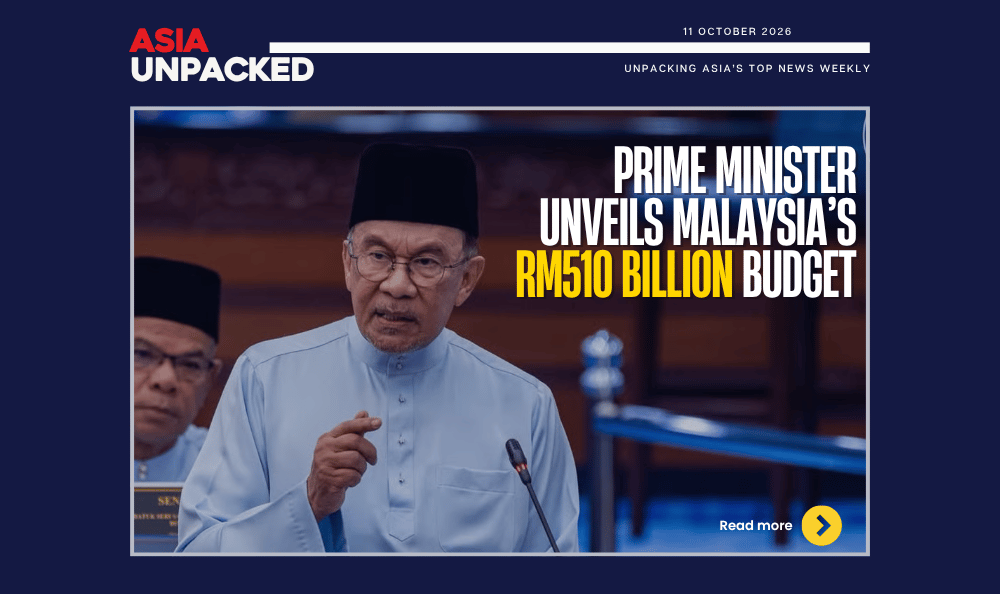
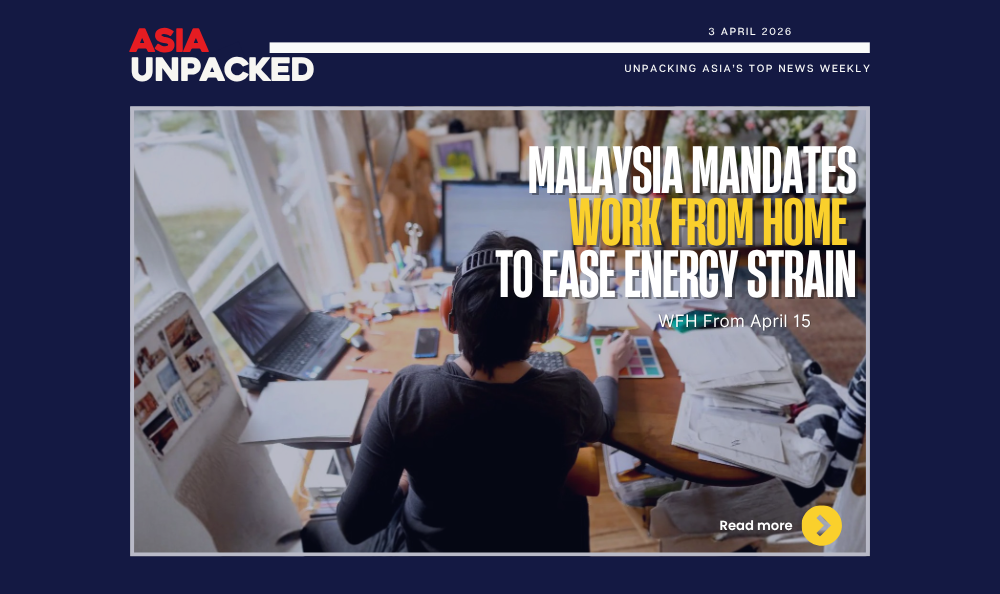
1.Malaysia mandates WFH for public sector employees to curb fuel consumption
The Malaysian government has announced mandatory work-from-home arrangements for public sector employees and government-linked companies starting 15 April. Prime Minister Anwar Ibrahim introduced this measure to curb fuel consumption amidst the escalating global energy crisis sparked by Middle Eastern tensions. To shield citizens from rising costs, the government is allocating an additional RM4 billion monthly to maintain RON95 petrol at RM1.99 per litre. However, fuel subsidy quotas have been adjusted to 200 litres per month, alongside efforts to diversify energy imports and strengthen national resource management.
Read more:
https://www.channelnewsasia.com/asia/malaysia-civil-servants-work-home-iran-war-6032981
2. Malaysia to build 18 Waste-to-Energy facilities by 2040 for green transition
Malaysia aims to commission 18 waste-to-energy (WtE) facilities by 2040, generating 600MW of renewable energy as part of its green transition. This initiative aligns with the National Energy Transition Roadmap’s target of 70% renewable capacity by 2050. By reducing landfill waste by 85% and cutting 259,000 tonnes of annual carbon emissions, the project modernises solid waste management. A flagship RM660 million plant in Melaka is expected to be operational by 2029, reflecting a strong public-private commitment to sustainable technology and climate goals.
Read more:
https://theedgemalaysia.com/node/798403
https://www.bernama.com/en/news.php/general/news.php?id=2540144
3. Russia bans gasoline exports until July 31 to stabilize domestic markets
Russia has implemented a ban on petrol exports from 1 April to 31 July to stabilise its domestic market. Deputy Prime Minister Alexander Novak cited global price volatility triggered by the Middle East conflict as the primary driver. Despite steady crude processing, the government aims to prevent local shortages, which previously followed refinery attacks. This measure follows past export curbs intended to control fuel costs, as Moscow seeks to secure its own supplies amid ongoing regional and geopolitical instability currently affecting world energy markets.
Read more:
4.Mongolia names Uchral Nyam-Osor as PM after a nine-month political stalemate
Mongolia’s parliament has confirmed Uchral Nyam-Osor as the nation’s third prime minister in just nine months. The 39-year-old replaces Zandanshatar Gombojav, who resigned amidst internal party conflict and a persistent legislative stalemate. Uchral has vowed to reduce bureaucracy and stabilise import prices, pursuing a pro-market reform agenda. Nevertheless, experts suggest that deep-seated political animosity and ongoing corruption concerns could continue to deter foreign investors. Although leadership has changed, Mongolia remains focused on mining exports as the country moves towards a significant presidential election in 2027.
Read more:
5. NASA launches Artemis II, the first crewed lunar mission in over 50 years
NASA’s Artemis II mission successfully launched from Florida on Wednesday, carrying three American and one Canadian astronaut towards the moon. Utilising the massive SLS rocket and Orion capsule, this ten-day expedition represents the first crewed lunar flight in over fifty years. The mission serves as a dress rehearsal for a 2028 moon landing, aiming to surpass China’s upcoming space ambitions. Travelling a record-breaking 252,000 miles, the crew will validate essential spacecraft systems. President Trump lauded the launch as a historic milestone for international space exploration.
Read more:
https://www.reuters.com/science/nasa-launches-first-crewed-lunar-mission-half-century-2026-04-01/